Connecton
A 3D isometric city where every person you want to keep in touch with lives in a house. Check in to wake it up.
| Role | Design, full-stack build, deploy |
|---|---|
| Year | 2026 |
| Stack | React 19, three.js, Supabase, Tailwind, PWA, Gemini |
| Links | Live site -> (opens in a new tab) |
The problem
Staying in touch with people is easy to intend and easy to forget. Contact lists and reminder apps feel like chores, so nobody opens them.
The idea
Every connection lives in a house in a small 3D city. A house goes dark and falls asleep when you have not been in touch for as long as you chose for that person. Logging a note wakes it, earns XP, and grows the city. An AI helper drafts your next message from your recent notes, so the hardest part (starting) is done for you.
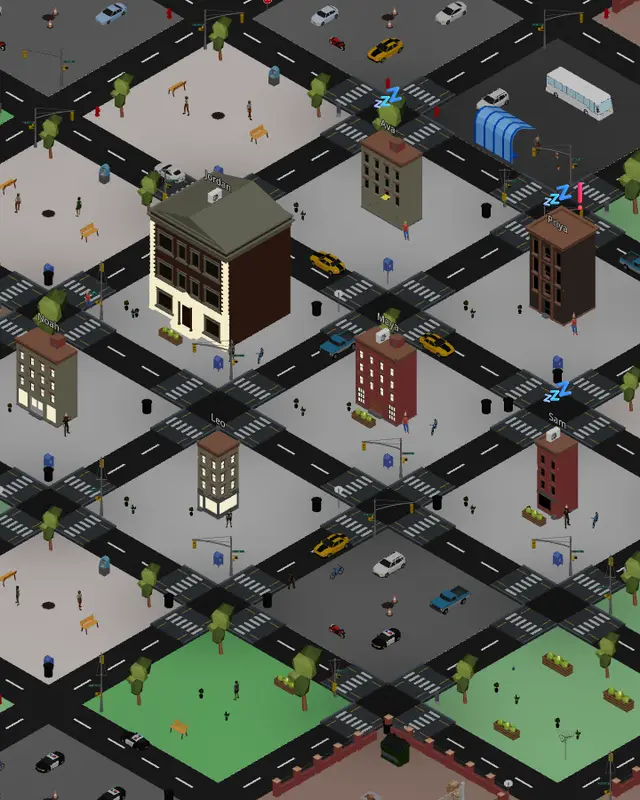
- 1 Awake. A recent note keeps the windows lit.
- 2 3 Asleep. The time you chose for that person has passed, so the windows go dark and a sleeping Z appears.
The map is a 7x7 grid of lots. A house only appears when you add a connection, and more lots open as your city level rises.
What I built
- A 3D isometric city with react-three-fiber: streets, traffic, parks, hills and a harbor, all generated from the account id so no extra data is stored.
- A server-side rules engine. XP is decided by a Postgres function (
log_interaction()), not the browser. Row-level security gives every row an owner, and the 20-connection cap is enforced by the database. - AI message drafts through Gemini, with the tone chosen from how you know the person and a rolling daily limit enforced on the server.
- Push reminders from a scheduled Supabase edge function that runs every 15 minutes, delivered to an installable PWA.
- A separate landing page in Astro: about 13 KB compressed, no analytics unless configured, and every button opens the app on sign-up.
Engineering notes
- 18 ordered SQL migrations, each next to its test, run with Node’s built-in test runner.
- The model files are compressed and checked by scripts (
models:compress,models:check) so the 3D scene stays light on phones. - Anything that affects fairness or cost (XP, draft limits, the connection cap) lives in the database, not the client.
Status
Live and in active development.